Postpartum OCD & Anxiety
The invisible trauma people don’t talk about.
For nine months you hear the same promises on repeat:

“Enjoy the peace and quiet while you can.”
“Once the baby’s here, everything will make sense.”
“You’ll feel nothing but love.”
“You’ll bounce back in no time.”
“Everything you’re feeling is normal. You are just overthinking.”
However, before I ever became a mother, my mind and body had already survived two events that rewired me from the inside out.
The brain aneurysm rupture — a trauma so catastrophic it didn’t just threaten my life, it changed my brain. Trauma like that leaves fingerprints. It heightens your anxiety with constant thoughts about what could happen, tightens your fight-or-flight response, and teaches your nervous system to live on edge.
Then, the miscarriage — a grief that changes how you love, hope, and attach. Pregnancy loss doesn’t disappear when a healthy pregnancy follows. It stays in the body. It lingers in the mind. It teaches your brain that joy can vanish without warning. It deepens anxiety and increases the risk of postpartum mental health disorders in the next pregnancy. It is known to significantly increase the risk of postpartum anxiety and OCD.
So while I thought I’d “already survived the worst,” my brain had been quietly shaped by trauma. And trauma doesn’t disappear just because you’re handed a newborn. If anything, motherhood puts gasoline on the embers you thought you’d snuffed out and safely walked away from.
When I entered postpartum, I wasn’t starting from a blank slate. I was entering a vulnerable chapter with a brain already shaped by trauma and a heart already shaped by loss.
____
The Science: Why Trauma Raises the Risk of Postpartum OCD & Anxiety
1. Trauma rewires the brain’s alarm system:
After something like an aneurysm rupture, the amygdala — the brain’s fear center — becomes overactive and stays that way.
2. Pregnancy loss increases postpartum anxiety and intrusive thoughts.
Women with a history of miscarriage are significantly more likely to experience postpartum OCD symptoms, hypervigilance, and catastrophic thinking.
3. Trauma dysregulates cortisol and adrenaline.
A stressed nervous system can’t downshift easily. Postpartum becomes one long, unrelenting “danger” signal.
4. Intrusive thoughts are a biological response, not a personal flaw.
People who’ve survived life-threatening events are more prone to intrusive, graphic, unwanted thoughts — the hallmark of postpartum OCD.
____
In other words, my brain wasn’t suddenly malfunctioning. It was doing exactly what trauma had trained it to do: scan for threats, protect what mattered most, guard the baby at all costs.
It is expected, and usually known, that postpartum won’t be perfect. It is expected to come with exhaustion and life changing adjustments. But what I walked into wasn’t the postpartum experience I heard people gently warn about. It was deeper, darker, sharper – a kind of postpartum I had never heard about.
It felt like I was fighting for survival all over again. An internal war zone I was determined to hide from all outside observers.
On the outside it looked like I was keeping it together. I had trained myself to put on a brave face, to go through the motions. I knew how to act functional, how to smile at the right moments, how to look like I was managing. All while my insides were still convinced disaster was always one breath away.
That’s what most people don’t understand – postpartum OCD and anxiety don’t show.
It hides behind competence.
Behind responsibility.
Behind perfection.
But, postpartum becomes the perfect, invisible, storm.
Trauma stacks.
Hormones shift.
The nervous system remembers.
It looks like lying awake all night watching the rise and fall of the baby's chest.
Checking the monitor.
Then checking again.
Then checking again.
It is intrusive thoughts — the kind no one warns you about — crashing into my mind without invitation.
It is trying to learn this new, incredibly important role of “mom”, all while my nervous system still believes catastrophe lives around every corner.
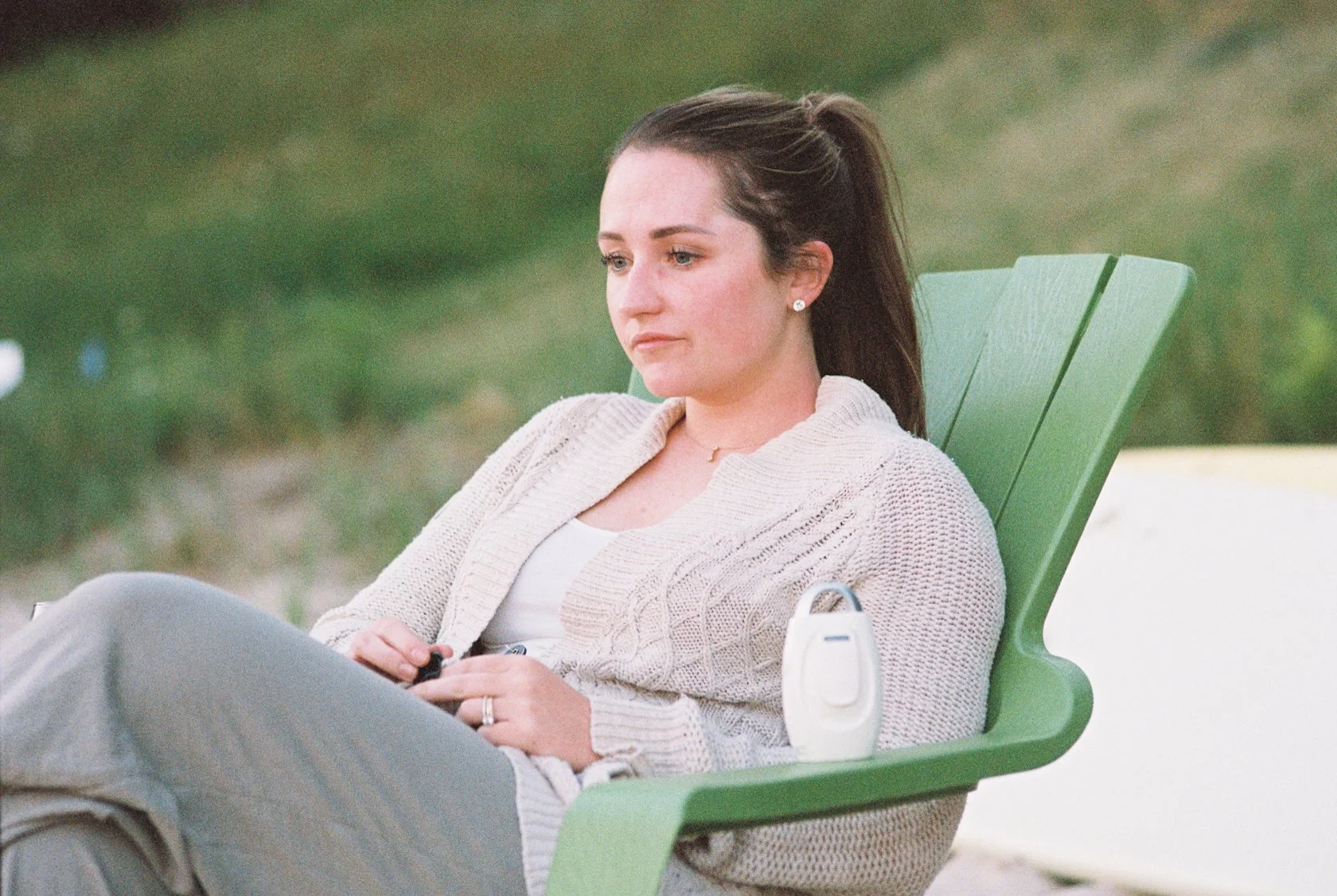
And for so long, I thought I was the only one.
I thought these thoughts made me flawed.
Dangerous.
Alone.
I was convinced I was alone in this until I started talking. Once I started talking other women quietly echoed similar experiences. Then, some years later, I stumbled on the documentary Witches, written and directed by Elizabeth Sankey. This documentary “examines the relationship between cinematic portrayals of witches and postpartum depression, utilizing film history footage alongside personal testimony.”
And there it was.
Women, out loud, speaking the thoughts I had been terrified to admit I had.
The same dark, intrusive thoughts.
The same shame.
The same fear that saying them would make them real, make them mine.
I remember sitting there with my jaw on the floor — frozen — because it was the first time I realized:
I wasn’t alone.
I wasn’t broken.
I wasn’t the only mother whose mind went to those terrifying places.
No one had ever told me that intrusive thoughts are the brain’s misguided way of trying to protect your baby.
No one had explained that trauma, hormones, and responsibility collide in the postpartum brain like a storm.
But in that moment, watching those women tell the truth I’d been swallowing whole, something softened.
The shame cracked.
The isolation lifted just enough for air to get in.
I didn’t know it then, but that moment would later become a defining part of my book — a scene where I finally understood that intrusive thoughts weren’t evidence of who I was.
They were evidence of what I had survived.
So, if you are in this right now, if this is your story too — or feels close to yours — this is what I wish someone had told me:
You are not dangerous.
You are not a bad mother.
You are not losing your mind.
You can heal.
You deserve support.
You are a mother with a nervous system shaped by trauma, hormones, responsibility, and love so big it terrifies your brain into overprotection.
This is the part of postpartum no one talks about.
This is the invisible trauma becoming visible.
This is me telling the truth so you know you can too.
And saying this out loud is strength, not shame.
